

Child & Family Psychology
At The Village Health Collective in Beenleigh, Logan, therapy focuses on understanding the why behind emotional and behavioural challenges, not just managing what shows up on the surface.
We use a compassionate, nervous-system-informed approach grounded in evidence-based psychological frameworks, with a strong focus on emotional safety, connection, and practical support.
Our work is person-centred, strengths-based, and tailored to each individual's or family's unique context. Therapy is never about "fixing" someone, it's about helping them feel understood, supported, and capable.
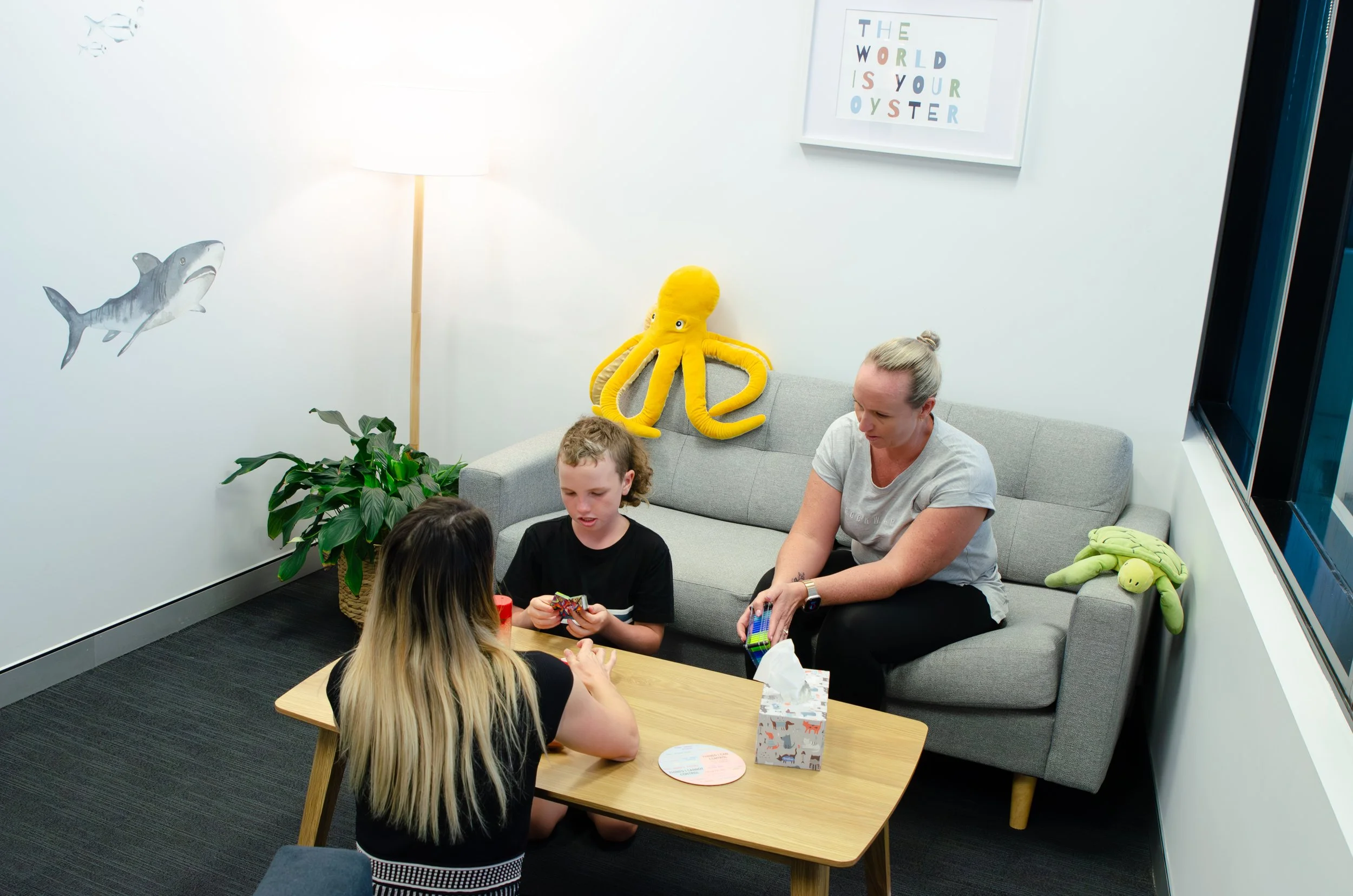
Our Approach
We provide therapy across the lifespan — for children, adolescents, and adults — and, where relevant, work closely with parents, partners, or caregivers as part of the therapeutic process.
Therapy is shaped around each person's developmental stage, life circumstances, and individual strengths.
Depending on your needs, therapy may involve:
Individual sessions (using age- and stage-appropriate strategies, including play-based approaches for younger clients)
Parent- or caregiver-only sessions
Joint parent-child or partner sessions
Collaboration with schools, GPs, and other professionals
We meet people where they're at and work at a pace that feels safe and supportive, recognising that trust and connection are central to meaningful change.
Therapy Sessions
Initial Consultation
At The Village, therapy begins with an Initial Consultation. For younger clients, this session is typically parent-only, depending on age. During this session, we gather background information, learn about your (or your child's) strengths, challenges, and current supports, and understand your individualised goals for therapy. This helps us begin forming a shared understanding of your needs. You may also be asked to complete some brief questionnaires to support this process.
Subsequent Consultations
Ongoing sessions provide continued support in a safe, calm, and non-judgemental environment.
Therapy may support children, adolescents, adults, and families with:
Emotional regulation (including anxiety, anger, sadness, and overwhelm)
Neurodivergent profiles, including ADHD and autism
Demand-avoidant or high-stress responses
Behavioural challenges
Self-esteem and identity development
Social skills and relationships
School challenges (including school refusal, bullying, or behavioural concerns)
Life transitions, stress, and adjustment
Parent support and guidance
Family stress and dynamics